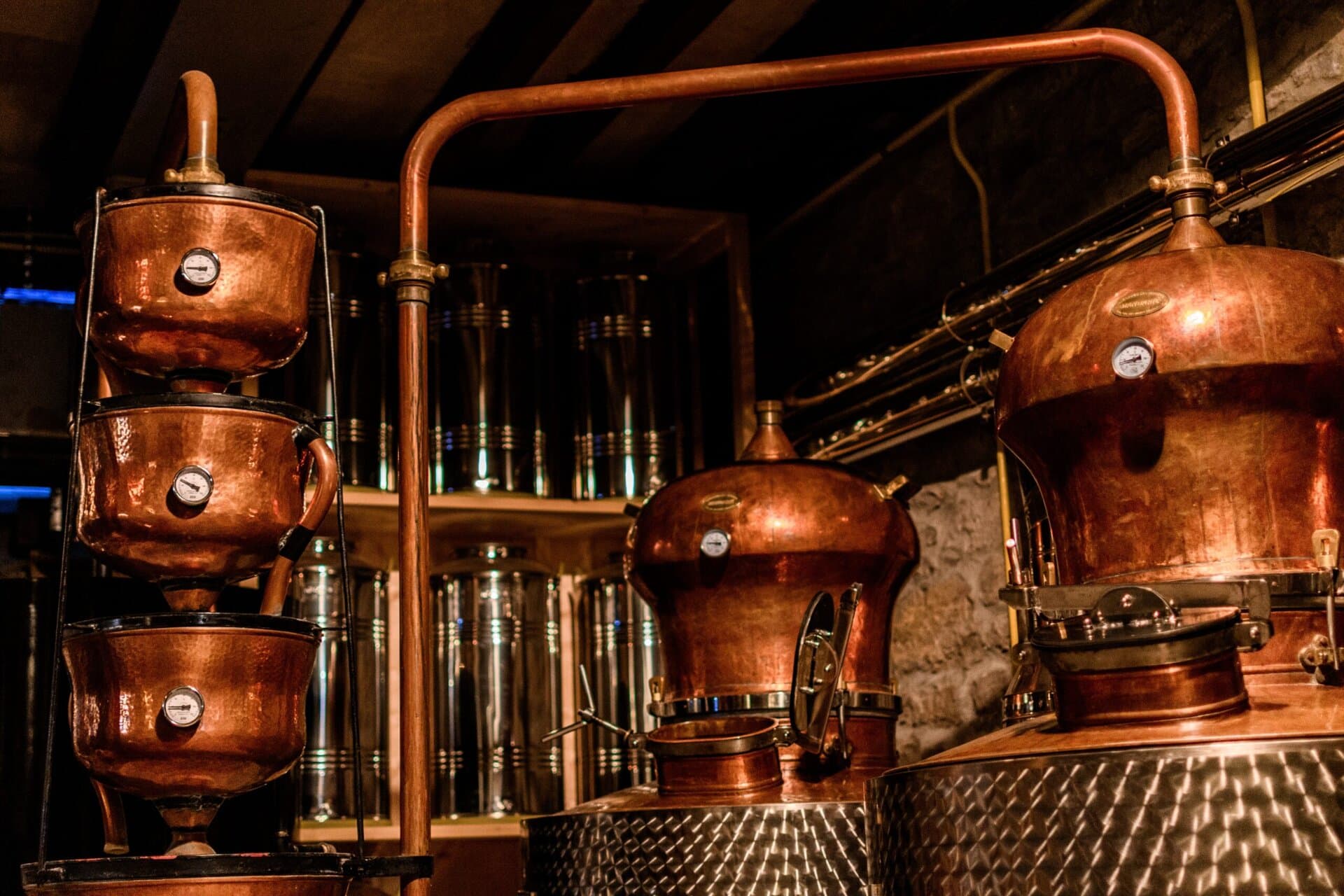
The main types of stills used to make vodka are pot stills, column stills, Coffey stills, and hybrid stills. Each still separates compounds through controlled heating and vapor extraction. Pot stills emphasize flavor and texture. Column stills maximize purity. Coffey stills bridge traditional and industrial techniques. Hybrid stills allow flexibility and control for modern distillers.
The Origins of Vodka Distillation
Distillation began more than a thousand years ago with basic alembic stills. These early devices were used for medicinal and alchemical purposes. By the 15th century, distillers in Eastern Europe refined spirits for both medicine and consumption. Over time, better control of heat and condensation led to cleaner alcohol.
In 1830, Aeneas Coffey revolutionized distillation with the patent still. His design allowed continuous production instead of single-batch operation. This invention shaped industrial spirit production worldwide. It remains a foundation for many modern vodka stills. Whisky Advocate’s overview of Coffey stills explores how his work changed the industry.
How a Still Works: The Science of Fractional Distillation
A still functions by heating a fermented liquid—called the wash—until compounds vaporize at their respective boiling points. Alcohols, esters, and other volatile components each have unique temperatures at which they evaporate. As the wash heats, lighter compounds rise first, followed by ethanol and heavier congeners.
This controlled heating and cooling process, known as fractional distillation, enables separation of alcohol from water and impurities. Distillers manage temperature and reflux to isolate specific vapor fractions. These fractions, called cuts, are divided into four distinct stages.
Foreshots
Foreshots are the first vapors released. They contain volatile and often hazardous compounds like acetone and trace methanol. Their sharp, chemical aroma signals the start of distillation. Distillers discard this fraction because it contributes no desirable flavor and can be unsafe.
Heads
The heads fraction follows. It includes compounds such as ethyl acetate and acetaldehyde, which impart solvent-like or fruity aromas. Heads can add complexity in small amounts but often make vodka taste harsh. Most distillers divert or recycle them to maintain smoothness.
Hearts
Hearts form the clean, central cut of the distillation run. They contain the ethanol that gives vodka its neutral yet refined character. This portion defines the spirit’s smoothness and balance. Distillers carefully control reflux, temperature, and copper contact to capture the purest hearts cut possible.
Tails
Tails appear as the still temperature rises further. They contain heavier alcohols and fusel oils that create oily or vegetal flavors. Tails are usually excluded from the final spirit. However, they can be redistilled later to recover residual ethanol.
Why Fractional Distillation Matters for Vodka
Vodka distillers focus on isolating the hearts cut with minimal impurities. The still’s design determines how effectively it separates these fractions. For example, column stills use multiple plates and reflux control to achieve precision. This allows production of vodka that is clean, neutral, and exceptionally pure.
The goal is not just reaching high proof but refining vapor extraction. Consistent control during each stage ensures purity, efficiency, and balance.
RELATED ARTICLE: SCIENCE OF ORGANIC VODKA PRODUCTION
Pot Stills: Tradition and Texture
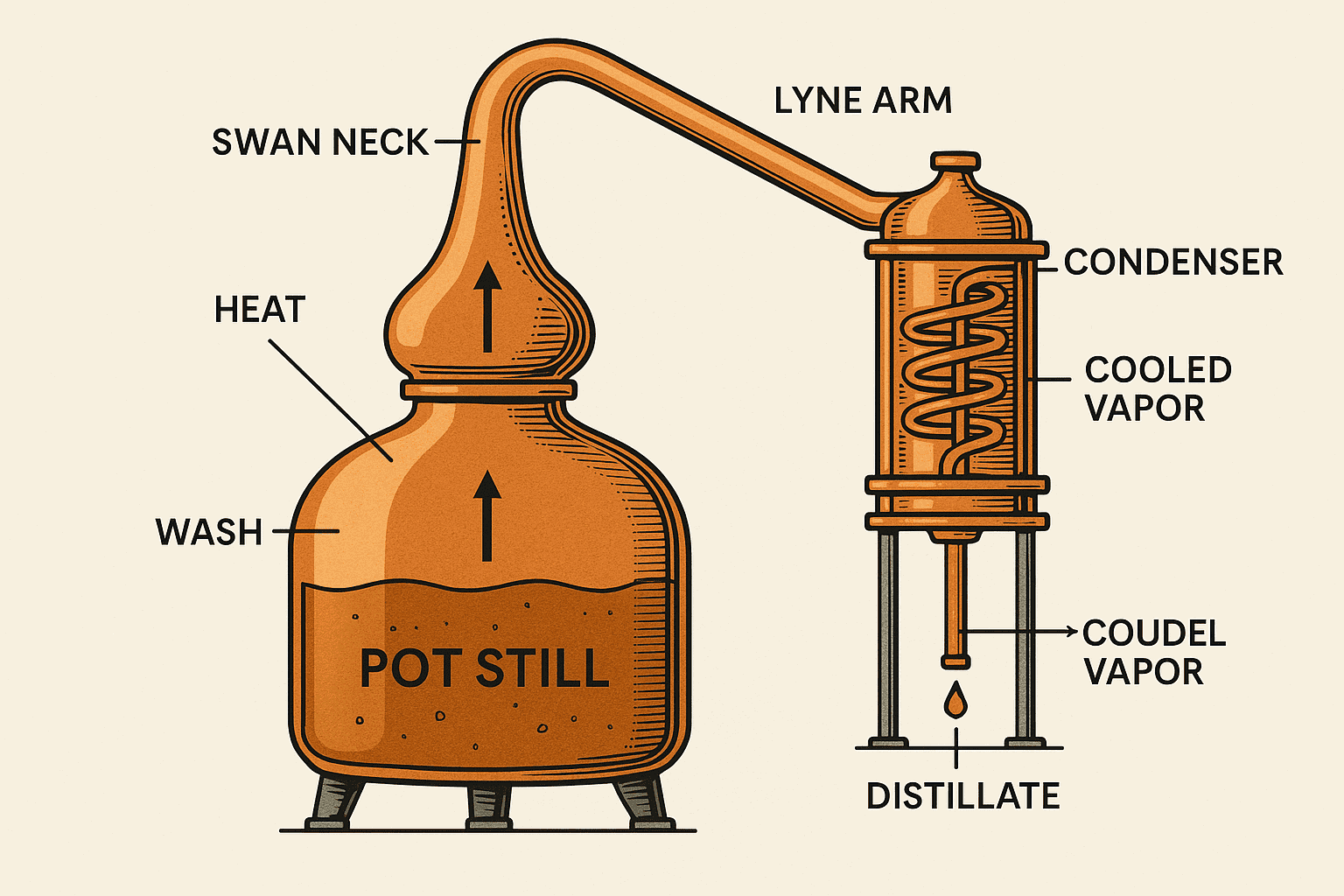
Pot stills are batch systems that rely on simple heating and condensation. The fermented wash is boiled in a copper pot. Alcohol vapors rise through the neck and condense as liquid in the coil or condenser.
Copper reacts with sulfur compounds, removing unpleasant aromas and improving mouthfeel. Pot stills retain more flavor from the base ingredient, which makes them ideal for small craft spirits. However, several runs are required to reach the high purity levels expected in vodka.
Column (Continuous) Stills: Efficiency and Purity
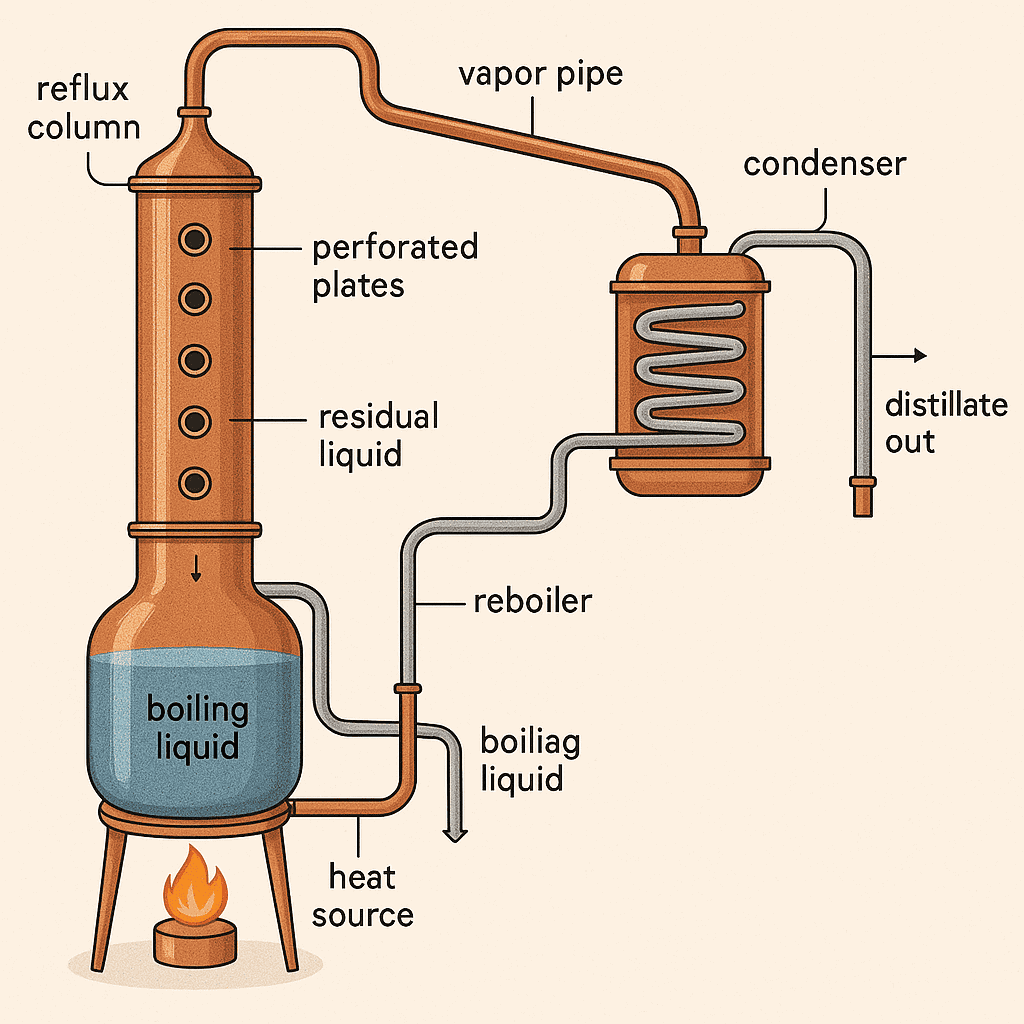
Column stills, also called continuous stills, feature vertical towers divided by perforated plates. As vapor rises and liquid descends, ethanol separates efficiently from water and impurities. Each plate represents a miniature distillation step, increasing purity with every level.
This design allows near-continuous operation and high throughput. Column stills can reach 95% alcohol by volume, which is the azeotropic point for ethanol and water. They are ideal for industrial-scale vodka production. Britannica’s guide to distillation explains how this technology transformed modern spirits.
The Coffey Still: Bridging Tradition and Industry
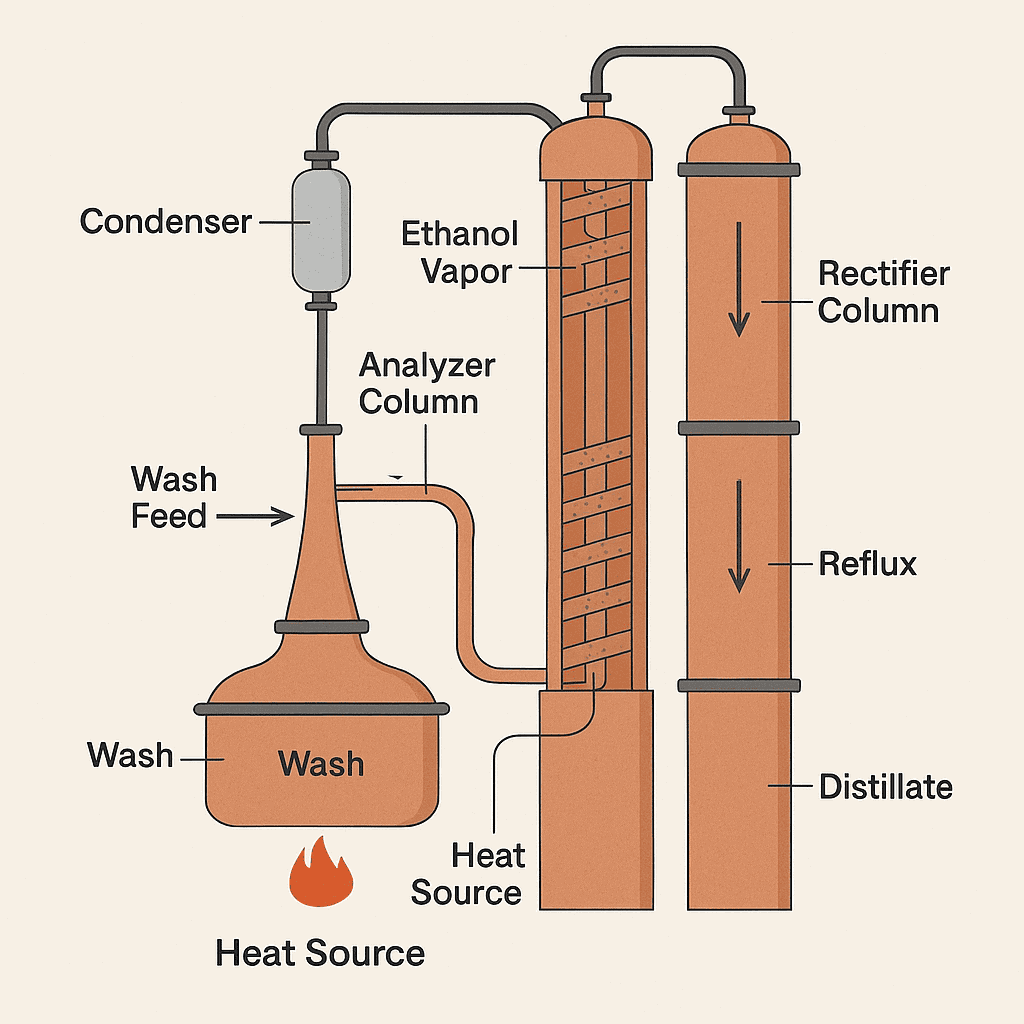
Invented by Aeneas Coffey, the Coffey still uses two linked columns—an analyzer and a rectifier. Alcohol vapor passes between them, creating efficient purification while preserving light character. The design offered early distillers a balance between volume and flavor.
Today, Coffey-style systems are favored by producers who want vodka with subtle texture rather than absolute neutrality. It remains an important bridge between pot and modern column stills.
Hybrid Stills: Flexibility for Modern Distillers
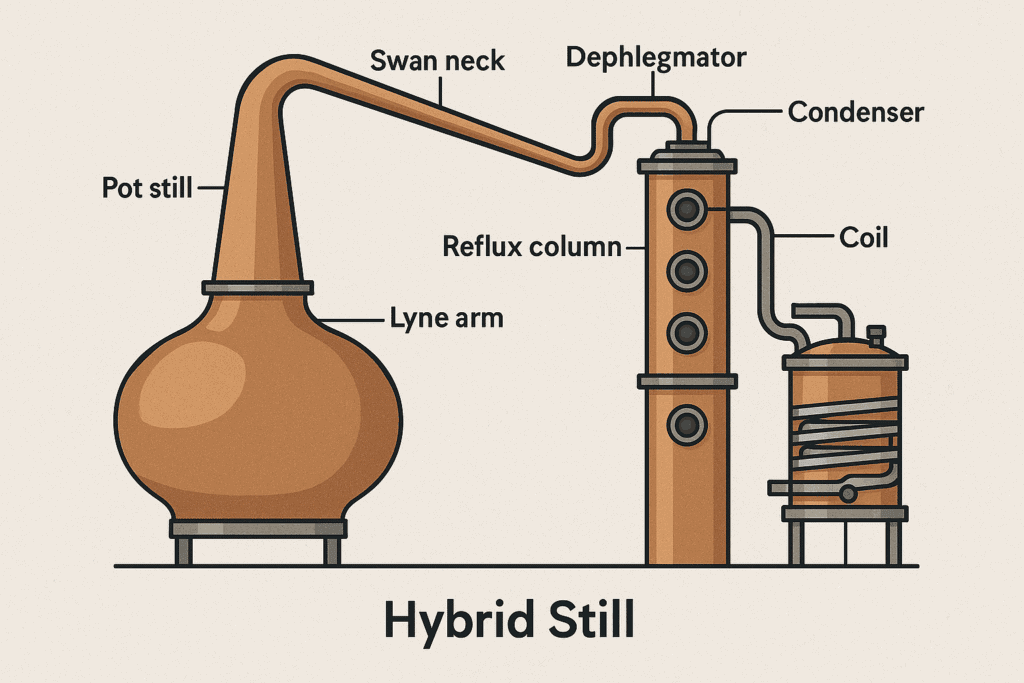
Hybrid stills merge pot and column technologies. A copper pot sits below one or more rectification columns. Distillers can redirect vapor through varying numbers of plates to adjust purity and taste.
This versatility suits craft producers who make multiple spirits. For vodka, hybrids offer precise control over the reflux ratio and copper contact, allowing production of smooth yet distinctive spirits.
The Role of Copper in Vodka Distillation
Copper is essential to spirit quality. It reacts with sulfur compounds during distillation, neutralizing harsh odors and improving texture.
Traditional pot stills are made entirely from copper. Modern stainless-steel columns include copper plates or mesh to maintain vapor contact. This combination provides both chemical benefit and energy efficiency. LibreTexts offers a clear explanation of the ethanol–water azeotrope and why distillation cannot exceed 95.6% ethanol.
The “Number of Times Distilled” Myth
Many vodka brands promote how many times their product is distilled. While the claim sounds impressive, it’s misleading. Once ethanol reaches around 95% purity, further distillation has almost no effect.
Quality depends on cut precision, still design, and copper interaction—not repetition. A single efficient run through a well-engineered column can outperform several passes in a basic still. Consumers now recognize that true craftsmanship lies in distillation control, not marketing slogans.
Comparison of Vodka Still Types
| Still Type | Efficiency | Purity Potential | Flavor Retention | Scalability | Ideal Use Case |
|---|---|---|---|---|---|
| Pot Still | Low | Moderate | High | Low | Craft spirits emphasizing texture |
| Column Still | Very High | Very High | Minimal | High | Industrial vodka production |
| Coffey Still | High | High | Moderate | Medium | Balanced purity and character |
| Hybrid Still | Medium | High | Adjustable | Medium | Flexible craft distillation |
Felene Vodka’s Clean Distillation Philosophy
Felene Vodka represents a modern clean-distillation philosophy. Produced from organic sugarcane, it is distilled using a multi-column system optimized for copper interaction. This ensures purity, consistency, and naturally smooth taste without additives.
No citric acid, sugar, or softening agents are ever used. Instead, Felene’s focus on proper vapor separation and fractional precision defines its signature clarity. For deeper insight, visit The Science of Vodka.
FAQ On Types of Vodka Stills
What are the main types of stills used to make vodka?
The main types of stills used to make vodka are pot stills, column stills, Coffey stills, and hybrid stills. Each works differently to separate ethanol and impurities, affecting purity, texture, and efficiency.
How does a still separate alcohol during distillation?
A still heats fermented liquid so alcohol and other compounds vaporize at different temperatures. Ethanol vaporizes first, rises, and condenses into a purified spirit while heavier compounds remain behind.
Why is copper used in distillation?
Copper reacts with sulfur and other volatile compounds during distillation, removing unpleasant aromas and improving smoothness. Many modern stainless-steel stills use copper plates or mesh for this purpose.
What is the difference between pot and column stills?
Pot stills work in batches and retain more flavor, while column stills operate continuously, producing higher-purity vodka more efficiently. Hybrid stills combine both designs for greater control and flexibility.
Does the number of times vodka is distilled matter?
No. Once ethanol reaches about 95% purity, additional distillation cycles have minimal effect. Quality depends on still design, copper contact, and operator skill—not on how many times vodka is distilled.
Final Sip
Understanding how stills separate and extract ethanol is key to vodka mastery. Pot, column, Coffey, and hybrid stills each shape purity and character differently. Copper’s catalytic role and good design matter far more than marketing claims about “times distilled.” In vodka, true quality comes from precision, chemistry, and control.
{ “@context”: “https://schema.org”, “@type”: “FAQPage”, “mainEntity”: [ { “@type”: “Question”, “name”: “What are the main types of stills used to make vodka?”, “acceptedAnswer”: { “@type”: “Answer”, “text”: “The main types of stills used to make vodka are pot stills, column stills, Coffey stills, and hybrid stills. Each works differently to separate ethanol and impurities, affecting purity, texture, and efficiency.” } }, { “@type”: “Question”, “name”: “How does a still separate alcohol during distillation?”, “acceptedAnswer”: { “@type”: “Answer”, “text”: “A still heats fermented liquid so alcohol and other compounds vaporize at different temperatures. Ethanol vaporizes first, rises, and condenses into a purified spirit while heavier compounds remain behind.” } }, { “@type”: “Question”, “name”: “Why is copper used in distillation?”, “acceptedAnswer”: { “@type”: “Answer”, “text”: “Copper reacts with sulfur and other volatile compounds during distillation, removing unpleasant aromas and improving smoothness. Many modern stainless-steel stills use copper plates or mesh for this purpose.” } }, { “@type”: “Question”, “name”: “What is the difference between pot and column stills?”, “acceptedAnswer”: { “@type”: “Answer”, “text”: “Pot stills work in batches and retain more flavor, while column stills operate continuously, producing higher-purity vodka more efficiently. Hybrid stills combine both designs for greater control and flexibility.” } }, { “@type”: “Question”, “name”: “Does the number of times vodka is distilled matter?”, “acceptedAnswer”: { “@type”: “Answer”, “text”: “No. Once ethanol reaches about 95% purity, additional distillation cycles have minimal effect. Quality depends on still design, copper contact, and operator skill—not on how many times vodka is distilled.” } } ] }