Why Clean Vodka Matters
The idea of clean vodka has captured the attention of today’s consumers. Shoppers increasingly want transparency in the spirits they purchase, just as they do with food. The phrase has become a shorthand for vodka free from additives, hidden sugars, or confusing marketing gimmicks.
While not officially defined by regulators, pure vodka resonates because it reflects a movement toward honesty in production and labeling. This article explores what the term means, how to evaluate it, and what buyers should watch for.
Defining Clean Vodka
In simple terms, clean vodka describes spirits that avoid additives and misleading claims. It emphasizes purity, quality ingredients, and transparent practices.
Characteristics include:
- Dependable sourcing of raw materials
- No chemical enhancements such as citric acid or glycerin
- Independent laboratory testing to verify purity claims
- Honest labeling about process and ingredients
- A smooth, neutral taste without chemical burn
Put simply, clean vodka is less about trend-driven branding and more about what is inside the bottle.
The Role of Ingredient Source
A vodka’s foundation begins with its base ingredients. Clean vodka often highlights organic or sustainable sourcing, ensuring integrity from the start.
- Organic Certification: Clean vodkas often use certified organic raw materials, reducing chemical residue from farming.
- Sustainability: Responsible farming and production align with consumer values.
- Minimal Inputs: True clean vodka should be little more than ethanol and water.
Without quality inputs, no amount of distillation can create an authentically clean product.
Additives and the Case for Simplicity
Some producers introduce additives to mask flaws. These include sugar for sweetness, glycerin for texture, and citric acid for acidity. While legal in small amounts, they undermine the principle of clean vodka.
Consumers increasingly expect vodka to rely on good distillation, not chemical shortcuts. This demand has fueled growth in the clean-label segment across spirits.
Independent Lab Analysis: Proof of Purity

A crucial aspect of clean vodka is independent laboratory verification. Federal regulations require testing for claims such as “no sugar” or “no additives.”
- If analysis is not referenced, the claim likely has no backing.
- Transparent brands make lab results available or highlight compliance on labels.
- This verification is what separates true clean vodka from empty slogans.
Without independent analysis, consumers are left to trust marketing, which is not enough.
Water Quality and pH Balance
Dilution water shapes the taste of vodka as much as its base spirit. Clean vodka emphasizes pure water and neutral pH.
- Neutral pH supports balance and smoothness.
- High-quality water avoids mineral aftertastes.
- Attention to dilution mirrors the clean-label promise.
The focus on water quality ensures consistency and contributes to the perception of pure vodka as refreshing and crisp.
Transparency in Labeling
Another hallmark of clean vodka is clarity in labeling. Too many brands use vague or exaggerated claims without context.
Transparency includes:
- Identifying base ingredients clearly
- Disclosing absence of additives
- Highlighting proof of lab testing
- Providing origin and production details
The TTB is the Alcohol and Tobacco Tax and Trade Bureau, a bureau within the U.S. Department of the Treasury.
- Role: It regulates and collects federal excise taxes on alcohol, tobacco, firearms, and ammunition.
- Key function in spirits: TTB oversees alcohol labeling, advertising, and formulas to ensure compliance with U.S. law.
- Why it matters: Any spirits producer in the U.S. (like Felene) must follow TTB rules for production, bottling, and marketing.
What is a COLA?
COLA stands for Certificate of Label Approval.
- Definition: A COLA is the TTB’s formal approval of an alcohol beverage label before it can be legally sold in the United States.
- Purpose: Ensures labels comply with federal regulations, including required statements (alcohol content, health warnings, producer details, class/type of spirit, etc.).
- Process: Producers submit label designs via the TTB’s COLAs Online system. TTB specialists review the label and either approve, reject, or return it for correction.
- Exceptions: Certain small-scale exemptions exist (e.g., products not leaving a state, formula waivers), but almost all commercially distributed spirits need a COLA.
When a label lacks detail, the vodka rarely fits the clean vodka definition.
Spirits labels can be problematic. For example, vodka may legally contain up to 1 gram of citric acid and 2 grams of sweetener per liter, yet producers are not required to disclose this on the label. Consumers often assume vodka is just ethanol and water, but hidden additives are common.
Tim Kelly, Master Distiller – Felene Distillery
That is why independent laboratory analysis is crucial. Lab testing provides proof of what is — and is not — in the bottle. Without it, even “clean” marketing claims can be misleading.
Taste and Consumer Expectation
Taste is subjective, yet most drinkers expect clean vodka to be smooth, neutral, and crisp. Harsh afterburn or chemical notes suggest additives or flaws in distillation.
In practice, clean vodka delivers a natural character without masking agents. That makes it versatile for cocktails and appealing when enjoyed neat.
Checklist: How to Identify Clean Vodka
When evaluating vodkas, use the following six-step checklist:
- Certified organic or sustainably sourced ingredients
- No added sugar, glycerin, citric acid, or artificial flavorings
- Independent laboratory analysis verifying claims
- Clear, transparent labeling
- Neutral pH supported by pure dilution water
- Smooth taste without chemical burn
Any vodka that meets all six standards fits the definition of clean production.
Caveats: Misleading Marketing Claims
Not every claim equates to clean production. Buyers should be cautious of marketing language focused on repetition.
The “Number of Times Distilled” Gimmick
Many brands highlight multiple distillations. However, excessive cycles often point to inferior raw materials or over-processing. If the number of distillations is the main attribute, it may not reflect clean vodka practices.
The “Multiple Filtrations” Pitch
Similarly, repeated filtration does not guarantee purity. A clean vodka depends more on ingredient quality and honest processes than on how many times it is filtered.
These claims may distract from what truly matters: lab analysis, sourcing, and transparency.
Why Clean Spirits Resonates with Consumers
The movement reflects broader consumer trends. According to NielsenIQ’s 2024 Clean Label Report, more than 60% of U.S. shoppers now check product labels for hidden ingredients. Spirits buyers want the same assurance.
Clean vodka meets this demand by aligning with:
- Health-conscious drinking habits
- Authentic branding free from gimmicks
- Premium expectations of transparency and integrity
The push for cleaner choices is not a passing trend but part of the long-term shift in how consumers evaluate what they drink.
Applying the Checklist in Practice
A number of vodkas aim to meet these standards. When applied, the checklist quickly separates genuine clean vodka from imitators.
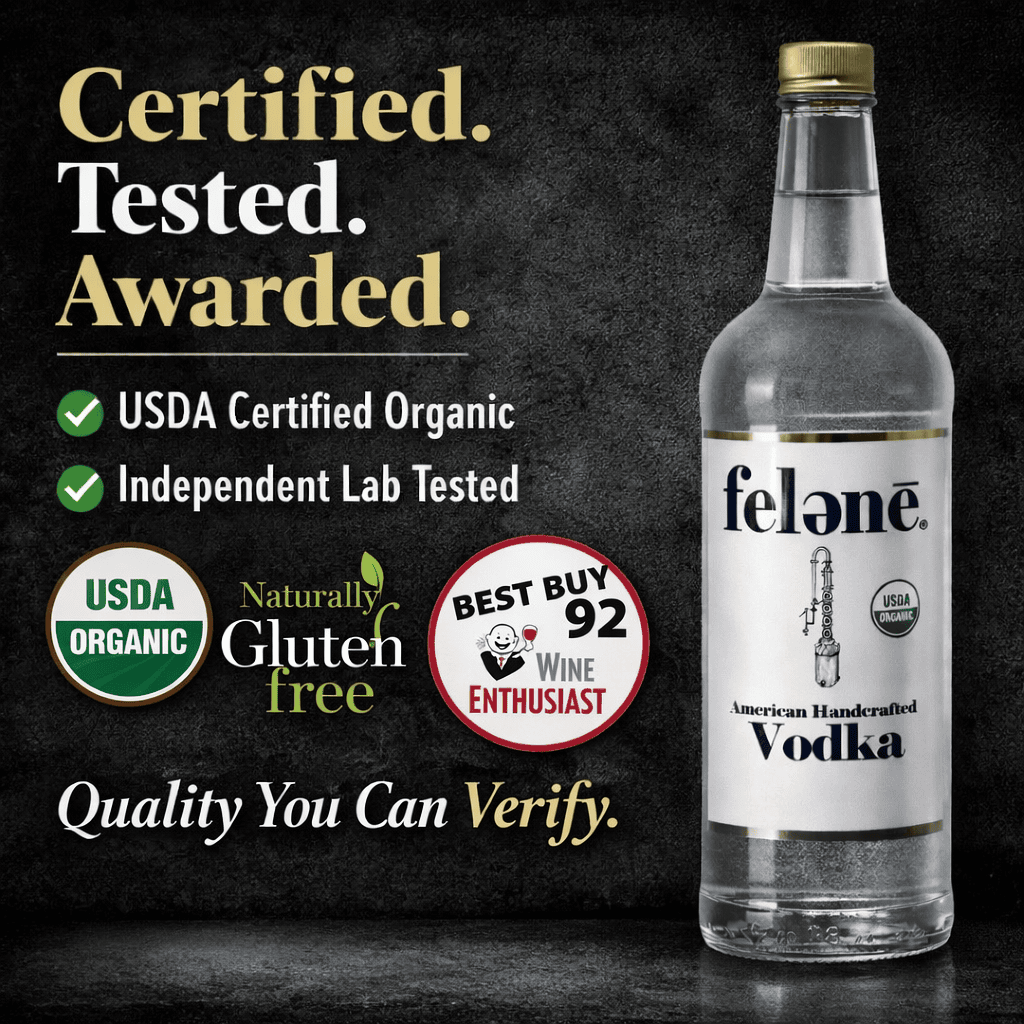
For instance, some brands—like Felene Vodka—demonstrate the model clearly. It is distilled from organic sugarcane, contains no additives, provides lab verification, and maintains a neutral pH. While not the only example, it shows how the checklist can be met in practice.
This practical application underscores why consumers should always look beyond slogans to verify clean vodka credentials.
The Future of Clean Vodka
The term clean vodka may lack formal definition, but its meaning is clear to consumers. It represents purity, transparency, and integrity in an industry often driven by style over substance.
By focusing on sourcing, rejecting additives, demanding independent lab analysis, and reading labels carefully, buyers can identify spirits that embody the clean vodka standard.
Exaggerated claims of distillations or filtrations may sound impressive, but they distract from the essentials. In the end, clean vodka is about simplicity done right—nothing more, nothing less.