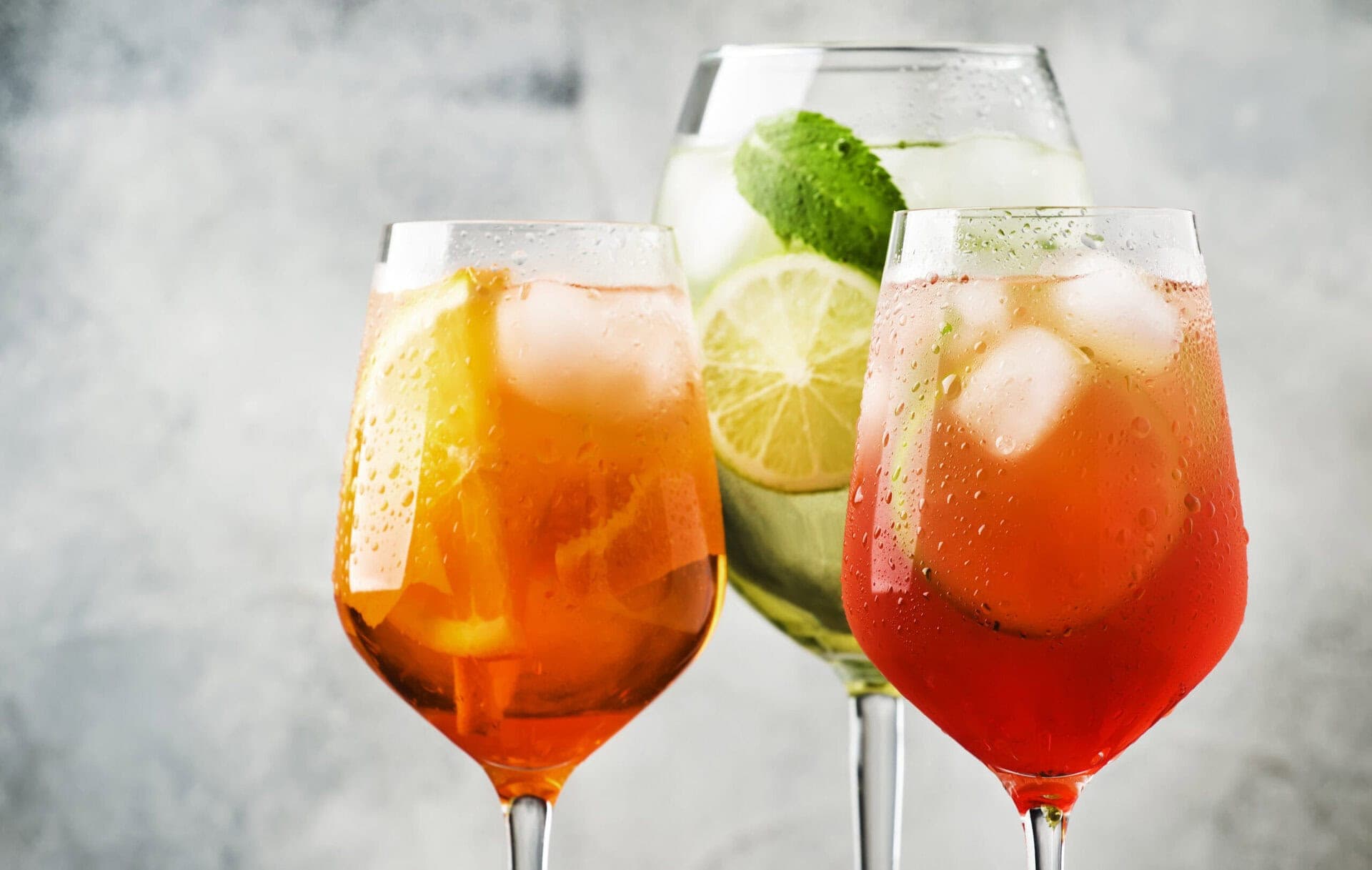
What Is a Hugo Spritz?
A Hugo Spritz is a sparkling cocktail made with elderflower liqueur or syrup, Prosecco, sparkling water, mint, and lime. It is designed to feel crisp, aromatic, and easy to drink. The elderflower gives it a floral sweetness. Meanwhile, the mint and citrus keep it bright and lifted. For the elderflower we suggest St. Germain. There are other brands that are solid, but we have our favorite and it remains St. Germain.
The Hugo Spritz and Aperol Spritz are two of today’s most recognizable spritz cocktails. Both are sparkling, social, and built for relaxed drinking. However, they offer very different flavor experiences. The Hugo Spritz is floral, minty, and softer on bitterness. The Aperol Spritz is orange-led, bittersweet, and more assertive.

What Is a Hugo Spritz? A Consumer Guide to the Hugo Spritz and Aperol Spritz
Hugo Spritz Cocktail Recipe
Ingredients
1.5 oz Elderflower liqueur
2 oz Prosecco
2 oz Sparkling water
8-10 leaves Mint
1 wedge lime
Directions
- Fill a large wine glass with ice.
- Add the mint leaves.
- Pour in the Prosecco and sparkling water.
- Add the elderflower liqueur.
- Stir gently.
- Garnish with a mint sprig and lime wedge.
- Serve immediately.

Notes
- This is a light, sparkling aperitivo cocktail. For best aroma, the mint should be handled gently. The drink is generally served in a large wine glass over plenty of ice. The ingredient order above follows the official St-Germain version.
Why These Two Cocktails Are Often Compared
These drinks share the same broad drinking occasion. Both are commonly served in large wine glasses over ice. Each of these cocktails lean on sparkling wine and soda. Both are strongly tied to aperitivo culture and warm-weather social settings. However, they diverge sharply in aroma, flavor, and audience appeal. That is why consumers often compare them before ordering.
Where Did the Hugo Spritz Come From?
The Hugo Spritz is widely credited to bartender Roland Gruber in South Tyrol, Italy, in 2005. Early versions reportedly used lemon balm syrup. Later, elderflower became the better-known modern direction. Official brand materials also note that the drink was first called “Otto” before “Hugo” became the lasting name.
What Is an Aperol Spritz?

An Aperol Spritz is a sparkling aperitivo cocktail built around Aperol, Prosecco, and soda water. Its defining trait is bittersweet orange character. It is brighter, more structured, and more bitter than a Hugo Spritz. Aperol traces back to 1919, when it was created by the Barbieri brothers after several years of development.
How the Flavor Profiles Differ
The Hugo Spritz is softer and more aromatic. It usually appeals to drinkers who like floral notes, mint freshness, and a gentler palate. It feels breezy and polished. By contrast, the Aperol Spritz is more citrus-driven and more obviously bitter. It suits drinkers who enjoy aperitifs, bitter orange, and more tension in the glass.
Hugo Spritz Flavor Profile
The Hugo typically tastes floral, lightly sweet, minty, sparkling, and fresh. Its bitterness is modest. Because of that, it often feels more approachable to casual cocktail drinkers.
Aperol Spritz Flavor Profile
The Aperol Spritz usually tastes bittersweet, citrusy, sparkling, herbal, and more aperitivo-forward. It has broader mainstream recognition, but it also asks more of the palate because bitterness is part of its appeal.
RELATED: TOP COCKTAILS FOR 2026
Which Cocktail Is Better for Different Occasions?
The Hugo Spritz is often better suited to brunches, patio lunches, spring gatherings, bridal events, garden parties, and easy afternoon drinking. Its softness makes it an easy recommendation when someone wants “something light.” Recent reporting also shows that it has crossed into après-ski and travel-adjacent occasions because it feels polished and escapist.
The Aperol Spritz is often stronger in classic aperitivo settings, rooftop bars, pre-dinner drinks, and gatherings where a more traditional bitter profile is expected. It remains a benchmark cocktail because it is instantly recognizable and carries a clear aperitivo identity.
What Foods Pair Best With Each Drink?
The Hugo Spritz pairs well with lighter foods. Good choices include prosciutto, mild cheeses, olives, smoked salmon, shrimp, lemony salads, grilled vegetables, and herb-forward dishes. Its delicate floral character can be overwhelmed by very heavy food, so fresher pairings usually work best. The ingredient set itself supports that lighter style of pairing.
The Aperol Spritz stands up better to salty and richer aperitivo foods. It works well with charcuterie, fried snacks, marinated vegetables, potato chips, and many pre-dinner bites because its bitter orange profile cuts through fat effectively.
Why the Hugo Spritz Has Gained So Much Attention
The Hugo Spritz has attracted attention because it fits several current consumer preferences at once. It is photogenic, easy to understand, lighter in bitterness, and tied to a relaxed European mood. Recent coverage has linked its rise to social media visibility, growing consumer search interest, and a broader appetite for lighter sparkling serves.
That does not mean the Aperol Spritz is disappearing. It means the spritz category has widened. Consumers now see “spritz” as a family of drinks rather than one default order. That shift creates room for multiple favorites, with the Hugo and Aperol serving different preferences rather than canceling each other out.
Which One Should You Order?
Choose the Hugo Spritz if you want something floral, refreshing, mint-lifted, and easy on bitterness. It is often the safer choice for mixed groups and newer spritz drinkers. Choose the Aperol Spritz if you enjoy bitter orange, aperitivo flavors, and a more classic Italian profile. Neither is objectively better. They simply satisfy different moods and palates.
Why This Comparison Matters for Consumers and Bartenders
For consumers, this comparison makes ordering easier. It helps set expectations before the first sip. For bartenders, it improves menu language and recommendation quality. A guest asking for “a spritz” may want floral softness or bittersweet structure. Those are not the same thing. Clear explanation helps service.
Final Take
The best way to understand these cocktails is simple. The Hugo Spritz is floral, minty, and approachable. The Aperol Spritz is citrusy, bittersweet, and more traditional. Both deserve their popularity. However, they succeed for different reasons. That is exactly why consumers should evaluate them side by side rather than treat them as interchangeable drinks.