Quick Search in Private Label Spirits Best Practices
- Positioning Best Practices: Borrow Category Trust, Do Not Create It
- Packaging Best Practices: Familiar Signals Drive Faster Decisions
- Merchandising and Associate Education: One Story, Two Channels
- Pricing Best Practices: Preserve Premium Cues While Delivering Value
- Operational Best Practices: Consistency Enables Scale
- Supporting the Broader Private Label Framework
Private label spirits best practices for retailers focus on aligning products with familiar premium references, supported by disciplined packaging and consistent merchandising. This approach accelerates consumer trust, lowers staff education requirements, and improves trial across on-premise and off-premise environments. When positioning, pricing, packaging, and placement work together, private label spirits become margin-driven retail assets rather than brand-building risks.
This article outlines marketing, merchandising, and packaging best practices developed through Felene’s private label advisory work with liquor stores, bars, and hospitality operators. The guidance applies across spirits categories, including vodka, gin, rum, tequila, whiskey, and ready-to-serve formats. Importantly, this content is designed to support, not duplicate, Felene’s private label distilling framework by focusing on downstream execution rather than production.
Why Offer a Private Label Spirits Program?
Before evaluating packaging or placement, retailers should first examine their motivation. Private label programs succeed only when the underlying objective is clearly defined. Without alignment on purpose, execution becomes inconsistent and results suffer. Therefore, retailers should assess whether private label aligns with strategic goals rather than impulse.
Margin expansion remains the most common driver. Private label spirits allow retailers to capture value otherwise retained by national brands. When executed properly, gross margin improvement is meaningful and repeatable. However, margin alone rarely sustains long-term success without supporting discipline.
Independence and control represent a second motive. Private label programs reduce reliance on distributor incentives, brand volatility, and portfolio shifts. Retailers gain pricing control, promotional flexibility, and inventory predictability. As a result, the business becomes less reactive to supplier disruptions.
Differentiation and exclusivity also play a role. A private label spirits program creates a product that cannot be price-compared across stores or bars. This exclusivity supports customer loyalty and reinforces destination value. When executed thoughtfully, private label strengthens brand identity without excessive marketing spend.
Vanity and ego, while rarely acknowledged, should be examined honestly. Private label should not exist solely to see a logo on a bottle. When vanity leads the decision, packaging often overwhelms practicality and merchandising discipline erodes. Consequently, performance suffers despite initial enthusiasm.
Retailers should decide which motive dominates before proceeding. Clear intent informs packaging restraint, pricing logic, and merchandising commitment. Without this clarity, private label becomes an unfocused experiment rather than a strategic asset.
Private Label Spirits: Market Data Retailers Should Understand
Private label spirits performance is supported by broader private label and beverage alcohol data.
These figures frame why disciplined execution matters for retailers considering private label programs.
| Data Point | Metric | Source |
|---|---|---|
| U.S. Private Label Dollar Sales (2025) | $282.8 billion, +3.3% YoY | PLMA citing Circana Unify+™ — https://www.plma.com/article/us-private-label-industry-reached-2828-billion-sales-2025 |
| Private Label vs National Brand Growth (2025) | Private label +3.3% vs national brands +1.2% | Grocery Dive (Circana data) — https://www.grocerydive.com/news/private-label-record-sales-volume-2025-plma-grocery/810093/ |
| Private Label Unit Volume Change (2025) | +0.6% private label vs −0.6% national brands | PLMA / Circana Unify+™ — https://www.plma.com/article/us-private-label-industry-reached-2828-billion-sales-2025 |
| Private Label Share of Total Store Sales | ~20.4% dollar share (record high) | Beverage Industry (Circana) — https://www.bevindustry.com/articles/96752-private-label-sets-market-share-records-in-first-half-of-2024 |
| U.S. Spirits Market Size | ~$123.5B annual value | Mordor Intelligence — https://www.mordorintelligence.com/industry-reports/united-states-spirits-market |
| Global Alcoholic Beverages Market (Forecast) | $3.8T+ by 2032 | Fortune Business Insights — https://www.fortunebusinessinsights.com/alcoholic-beverages-market-107439 |
| Consumers Willing to Pay More for Quality Spirits | ~67% of spirits consumers | NielsenIQ — https://nielseniq.com/global/en/insights/analysis/2026/five-consumer-trends-shaping-us-on-premise-spirit-sales/ |
| RTD Category Global Growth Outlook | $40B global value, continued growth | IWSR — https://www.theiwsr.com/insight/press-release/iwsr-forecasts-34bn-beverage-alcohol-growth-in-key-markets-by-2034/ |
What This Data Signals for Retailers
Private label growth is being driven by trust, familiarity, and value perception.
Importantly, unit growth confirms that consumers are not simply trading down.
However, success is not automatic.
Retailers executing private label poorly often underperform branded comparables.
Therefore, private label spirits must be positioned deliberately.
Packaging, pricing discipline, and staff education remain decisive variables.
Additionally, premium cues continue to influence spirits buyers.
As NielsenIQ data shows, quality perception still commands pricing power.
Consequently, private label spirits should not be framed as budget substitutes.
Instead, they should be positioned as smart, reliable category choices.
Finally, the size of the spirits and RTD markets underscores long-term relevance.
Private label programs aligned with these trends remain structurally advantaged.
MUST READ: PRIVATE LABEL DISTILLING
Positioning Best Practices: Borrow Category Trust, Do Not Create It
Private label spirits perform best when positioned against an established category reference rather than an unfamiliar concept. Retailers benefit when private label offerings align with well-known premium benchmarks that consumers already understand. This borrowed equity reduces hesitation at shelf and shortens the path to purchase. As a result, staff recommendations become simpler and more consistent.
Across spirits categories, successful private label programs frame the product as a premium-quality alternative offered at improved value or enhanced attributes. The comparison should remain implicit and category-based rather than brand-confrontational. For on-premise operators, this positioning supports house pours that maintain menu credibility while protecting margins. Familiarity consistently outperforms novelty in spirits retail.
Packaging Best Practices: Familiar Signals Drive Faster Decisions
Packaging remains the most immediate marketing signal for private label spirits. Bottle shape, closure type, and label hierarchy should align with category norms while avoiding direct imitation. Familiarity communicates legitimacy, while mimicry undermines trust and long-term credibility. Therefore, disciplined restraint is preferred across all spirits types.
Clear glass, clean label layouts, and premium tactile materials continue to perform well in multiple categories. Minimalist design improves readability and shelf recognition, especially in crowded sets. Retailers benefit when packaging communicates quality within seconds, as spirits decisions are often made quickly. Over-designed labels frequently suppress trial, whereas clarity supports confidence.
Merchandising and Associate Education: One Story, Two Channels

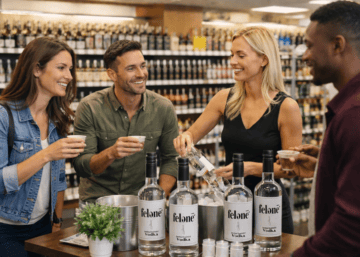
Effective merchandising does not stop at the shelf. Classic merchandising must be reinforced through associate education that articulates the same value proposition verbally. When shelf placement and staff messaging operate in parallel, consumer confidence increases significantly. This alignment converts curiosity into purchase.
Industry research consistently shows that a majority of spirits shoppers are influenced by store associate recommendations, particularly in premium and unfamiliar categories. Trust in knowledgeable staff remains one of the strongest drivers of trial. Therefore, merchandising strategy should assume associate interaction as part of the conversion path.
Associates should be trained to reference category benchmarks rather than criticize them. Disparaging the reference brand undermines credibility and creates consumer defensiveness. Instead, associates should present private label as a logical alternative that delivers similar quality with added value. This approach preserves trust while guiding choice.
For example, associates may explain that a private label spirit delivers a comparable profile or versatility at a better value. The reference brand remains respected, while the alternative is positioned intelligently. As a result, consumers feel informed rather than sold.
Shelf talkers, signage, and staff talking points should use consistent language. When the shelf and the associate tell the same story, hesitation drops. Consequently, private label becomes easier to recommend and easier to accept.
Entering Spirits Competitions: Credibility Without Heavy Advertising
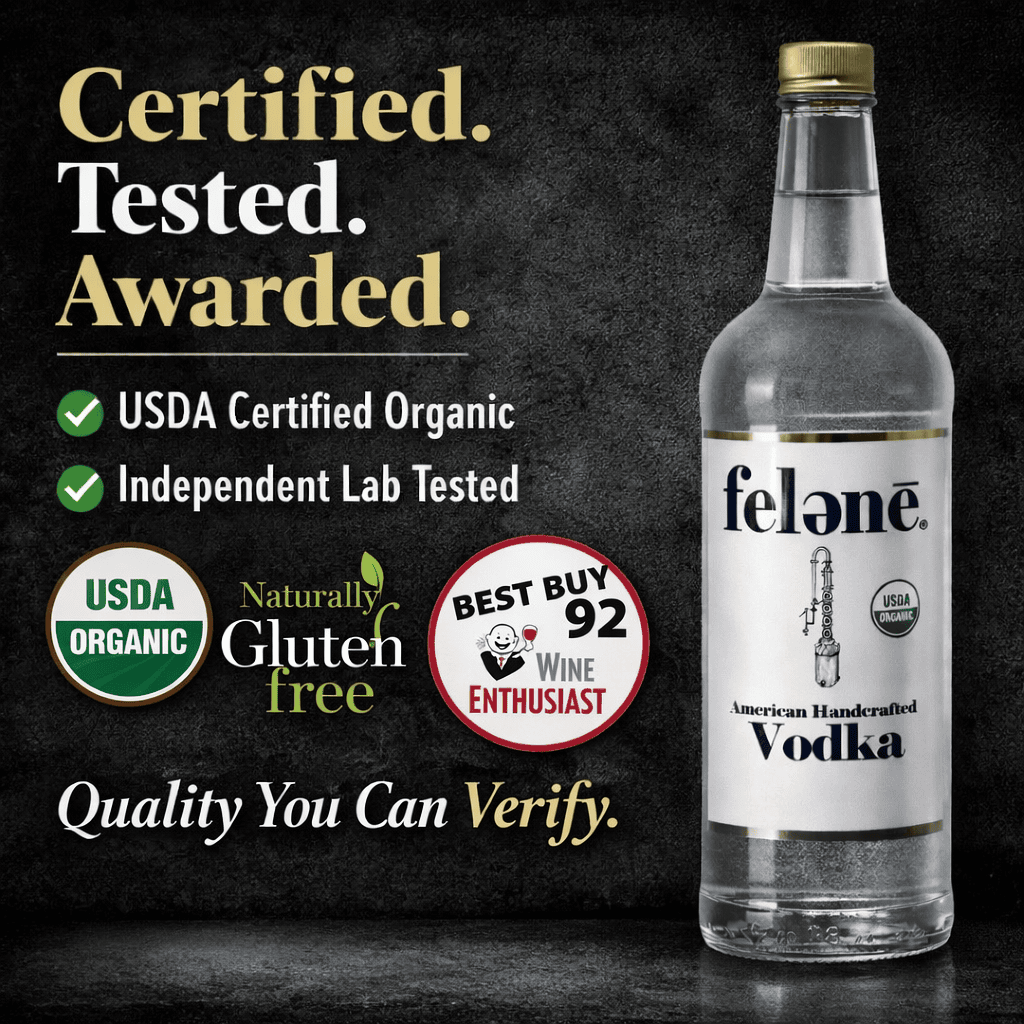
Spirits competitions can play a supporting role in private label retail strategy when used selectively and strategically. Awards should not be treated as a substitute for positioning or merchandising discipline. However, when integrated properly, third-party validation can accelerate trust, particularly in premium or unfamiliar categories. Therefore, competitions should be viewed as credibility tools rather than marketing centerpieces.
For private label spirits, awards are most effective when they reinforce an already familiar value narrative. A medal provides reassurance, not discovery. Consumers respond best when an award confirms a quality expectation they already recognize. As a result, awards work best alongside reference-based positioning rather than standalone claims.
Retailers should be selective about which competitions they enter. Established, category-recognized competitions carry more weight than obscure or pay-to-play programs. The objective is not volume of medals, but clarity of signal. One respected award often outperforms multiple unknown accolades.
Merchandising integration matters. Awards should be communicated subtly through neckers, shelf talkers, or menu cues rather than dominating the label. Overuse of medals can create skepticism and distract from core value messaging. Restraint preserves credibility and aligns with premium cues.
Associate education should incorporate award context carefully. Staff should frame awards as independent validation rather than proof of superiority. Reference brands should never be disparaged in the process. Instead, awards should be presented as additional reassurance that the private label delivers expected quality at improved value.
For on-premise operators, awards can support menu language or staff confidence, especially for house pours. For off-premise retailers, awards help reduce hesitation during first purchase. In both cases, competitions function best as trust accelerators within a broader execution framework.
Ultimately, spirits competitions should support, not define, private label strategy. When awards reinforce disciplined positioning, packaging, and merchandising, they contribute meaningfully to trial. When used in isolation, their impact remains limited.
Pricing Best Practices: Preserve Premium Cues While Delivering Value
Effective private label pricing establishes a visible value advantage without signaling inferiority. Excessive discounting weakens perceived quality across all spirits categories. Instead, a disciplined price gap preserves premium cues while improving margins. In most retail environments, a fifteen to twenty-five percent advantage remains effective.
Retailers should present private label spirits as a smart, informed choice rather than a budget option. This framing encourages repeat purchase behavior and long-term loyalty. Over time, the private label becomes a trusted default rather than a promotional experiment.
Operational Best Practices: Consistency Enables Scale
Consistency across positioning, packaging, pricing, and placement determines private label scalability. Programs often struggle when execution varies by location, shift, or staff member. Standardized talking points, merchandising rules, and visual guidelines reduce friction. As a result, the private label experience remains stable and credible.
Felene’s private label marketing services emphasize repeatable systems designed for retail and hospitality realities. These systems allow partners to expand private label spirits programs confidently without diluting quality signals. When execution remains disciplined, private label evolves into a durable competitive advantage.
Supporting the Broader Private Label Framework
This article supports the private label distilling and production framework offered by Felene Vodka by addressing execution beyond the still. While liquid quality establishes legitimacy, retail success is driven by positioning, packaging, merchandising, and pricing discipline. When these elements align across spirits categories, private label programs consistently outperform expectations while strengthening retailer control at shelf and on menu.
Private Label Spirits FAQ for Retailers
Why do private label spirits programs succeed for some retailers but fail for others?
Private label succeeds when the objective is clear and execution is disciplined. Programs fail when motivation is vanity-driven or operationally inconsistent. Clear positioning, restrained packaging, and aligned merchandising are required. Without those elements, private label becomes confusing rather than compelling.
Are private label spirits primarily about higher margins?
Higher margin is a core benefit, but it should not be the sole driver. Margin works best when paired with consistent positioning and value articulation. When margin is pursued without discipline, perceived quality often erodes. Sustainable success requires balance.
Do private label spirits work across all categories or mainly vodka?
Private label best practices apply across vodka, gin, rum, tequila, whiskey, and RTDs. Category norms differ, but consumer decision logic remains consistent. Familiar references and value clarity drive trial in every spirits segment.
How important is store associate education in private label performance?
Associate education is critical and directly impacts conversion. Most spirits shoppers trust knowledgeable staff recommendations, especially for unfamiliar products. When staff confidently articulate value, hesitation decreases. Merchandising alone is rarely sufficient.
Should associates compare private label spirits to national brands?
Associates should reference category benchmarks without disparaging national brands. Negative comparisons reduce trust and create defensiveness. The correct approach is offering private label as a logical alternative with similar quality and better value. Respect builds credibility.
Where should private label spirits be placed on the shelf or back bar?
Private label performs best when placed adjacent to its premium reference set. Proximity creates permission to consider the alternative. Isolation reduces credibility and slows trial. Placement should reinforce the verbal recommendation.
More Common Questions About Private Label Spirits
How should private label spirits be priced relative to reference brands?
Pricing should show a visible but disciplined advantage. Excessive discounting signals inferiority. A fifteen to twenty-five percent gap typically balances value and perception. Pricing discipline supports repeat purchase behavior.
Does private label risk cannibalizing branded spirits sales?
When executed properly, private label complements branded sales rather than replaces them. It captures value-driven consumers while preserving premium brand credibility. Disparagement increases cannibalization risk. Respectful alternatives protect category health.
What role does packaging play in private label success?
Packaging is the first trust signal. Familiar cues communicate legitimacy quickly. Over-designed or imitative packaging undermines credibility. Restraint improves readability, shelf impact, and associate confidence.
How does this strategy align with Felene’s private label services?
These best practices reflect Felene’s execution-focused advisory approach beyond production. While liquid quality establishes legitimacy, retail success depends on aligned merchandising and education. This framework supports scalable, category-agnostic private label growth.