Vodka Myth Busters: Separating Fact from Fiction
Vodka is one of the world’s most popular spirits, but it may also be one of the most misunderstood. In this Vodka Myth Busters feature, we separate fact from fiction about the world’s favorite clear spirit. From whispered barroom wisdom to advice passed down at family gatherings, countless stories shape the way people think about vodka. Some of these ideas have a grain of truth. Others are pure fiction dressed up as fact.
The origins of vodka myths often trace back to personal experiences—one bad night, a memorable toast, or a conversation with a well-meaning friend. A college roommate might swear that a certain brand “never” causes hangovers. A bartender might insist that potato vodka is “smoother” than grain vodka. An uncle might warn that vodka “made in Russia” is the only “real” vodka. Over time, these claims get repeated until they feel like universal truths.
One story that circulates in Eastern Europe dates back to the Cold War, when travelers smuggled bottles across borders, convinced that only spirits from home were pure enough to drink. Another comes from the early U.S. vodka boom of the 1970s, when marketers introduced the idea that triple-distilled vodka was vastly superior, even though “triple” was more a selling point than a scientific benchmark.
While myths can be entertaining, they also shape purchasing decisions and drinking habits. That’s why we’ve compiled the Top 10 Vodka Myths—and applied real evidence to determine whether they’re true or false.
Vodka Myth Busters: Top 10 Vodka Myths and the Truth Behind Them
1. Some Vodkas Are Smoother Than Others
Verdict: TRUTH
Origin of the Claim:
The smoothness debate has been around since vodka first entered Western markets in the mid-20th century. Advertisers leaned heavily on terms like “ultra-smooth” to set brands apart.
Why It Persists:
- Distillation techniques vary. Pot stills, column stills, and hybrid stills produce different mouthfeels.
- Water quality matters — minerals in dilution water can affect texture.
- Base materials such as sugarcane, wheat, or potatoes can leave faint but noticeable signatures.
Fun Fact:
In blind tastings, even self-proclaimed “vodka haters” often pick a favorite, proving that subtle differences are detectable.
2. Vodka Has No Taste
Verdict: MYTH
Origin of the Claim:
Early U.S. marketing in the 1950s promoted vodka as “tasteless, colorless, odorless” to position it as a mix-friendly spirit for post-Prohibition drinkers unused to strong flavors.
Why It Persists:
- Vodka is legally defined as “neutral” in many jurisdictions.
- Compared to whiskey or rum, flavor notes are subtle.
What the Science Says:
Trace congeners survive distillation, and each raw material leaves unique volatile compounds that our senses can detect.
Fun Fact:
In 2020, the U.S. TTB quietly updated its definition to admit vodka may have a distinctive character, aroma, or taste.
3. Certain Vodkas Cause Allergic Reactions
Verdict: TRUTH
Origin of the Claim:
This belief comes from drinkers who experience flushing, hives, or rashes after certain brands or styles.
Why It Happens:
- Rare protein residues from grain or potato bases.
- Trace histamines in fermented ingredients.
- Genetic enzyme deficiency (ALDH2), which impairs acetaldehyde breakdown.
- Flavor additives that trigger sensitivities.
Fun Fact:
Clear spirits like vodka have far fewer histamines than red wine, yet individual sensitivities still vary widely.
4. Expensive Vodka Prevents Hangovers
Verdict: MYTH
Origin of the Claim:
Luxury vodka marketing in the 1990s and early 2000s suggested that higher price meant a “cleaner” next day.
Reality Check:
- Hangovers are caused by alcohol’s dehydrating effects and your body’s reaction to ethanol.
- Lower-congener vodkas might be slightly less harsh, but price isn’t the determining factor.
Fun Fact:
A $12 bottle of well-made vodka can produce the same next-day results as a $60 one—if consumed in the same quantity.
RELATED: Breaking the Hangover Myth
5. Drinking Vodka Straight Gets You Less Drunk Than Mixing It
Verdict: MYTH
Origin of the Claim:
Possibly born from the belief that neat vodka is “sipped slowly” while cocktails go down faster.
Why It’s False:
- Alcohol absorption depends on quantity and time, not mixing method.
- Sweet mixers can hide alcohol flavor, leading to overconsumption.
Fun Fact:
Some cocktails can deliver more alcohol per sip than a neat pour, making them deceptively strong.
6. Freezing Vodka Makes It Better
Verdict: TRUTH (technically*)
Origin of the Claim:
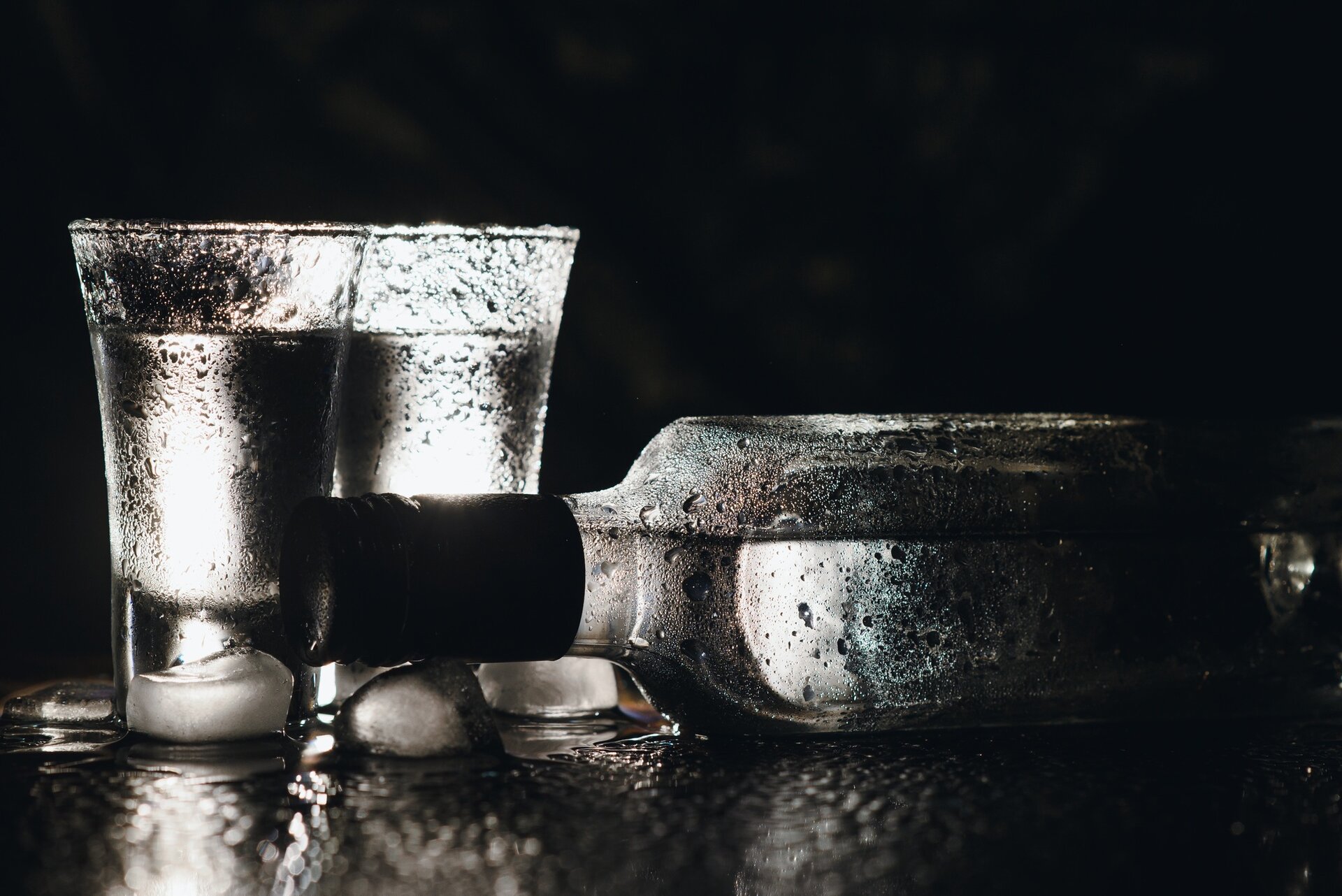
Eastern European households traditionally store vodka in the freezer to create a viscous, silky mouthfeel.
Why It Works:
- Chilling suppresses alcohol vapors, softening the perception of harshness.
- However, extreme cold can mask delicate notes in premium craft vodkas.
*(We have to add that while technically “True,” freezing vodka masks tastes and harshness but does not eliminate it. )
Fun Fact:
In Russia, ultra-chilled vodka is sometimes paired with salty snacks called “zakuski” to balance flavor and texture.
7. All Vodkas Are Gluten-Free
Verdict: TRUTH
Origin of the Claim:
Health and wellness marketing in the 2010s amplified gluten-free labeling, even on products that never contained gluten after processing.
Why It’s True:
- Distillation removes gluten proteins entirely.
- Only cross-contamination post-distillation poses a risk.
Fun Fact:
Even vodkas made from rye or barley are safe for celiac sufferers—distillation is that effective.
8. Flavored Vodkas Are Just as Pure as Unflavored
Verdict: MYTH
Origin of the Claim:
Flavored vodka surged in popularity in the 2000s, with brands suggesting these were simply “natural extensions” of pure vodka.
Reality:
- Many include added sugar, glycerin, citric acid, and artificial flavors.
- Additives change the chemical profile and can increase hangover potential.
Fun Fact:
A flavored vodka can legally contain far more sugar than a dessert wine—and most drinkers never realize it.
9. Vodka Can Be Used Medicinally
Verdict: TRUTH (with limits)
Origin of the Claim:
Historically, vodka was used as a household disinfectant and cold remedy in Eastern Europe.
The Facts:
- Ethanol is antiseptic, but vodka’s 40% ABV is below the ideal 60% for sterilization.
- Safe as a cleaning agent in a pinch, but not a substitute for medical-grade solutions.
Fun Fact:
Some rural households still use vodka-soaked compresses for fevers—though doctors generally recommend against it.
10. Vodka Never Goes Bad
Verdict: TRUTH
Origin of the Claim:
Vodka’s high alcohol content made it a trade good that could survive months on the road without spoiling.
Why It’s True:
- Unopened vodka is shelf-stable indefinitely.
- Open bottles may lose aroma slowly but remain drinkable.
Fun Fact:
Archaeologists have found century-old bottles of spirits still safe to consume, though taste may fade over decades.
11. The Higher the Number of Times Vodka Is Distilled, the Better the Quality
Verdict: MYTH
Origin of the Claim:
In the 1990s and 2000s, vodka marketing campaigns leaned heavily on “triple-distilled” or “five-times distilled” as a mark of purity. The bigger the number, the more premium the product appeared—at least on the label.
Why It’s Misleading:
- Distillation removes impurities, but after a certain point, extra passes give diminishing returns.
- Over-distilling can strip away subtle aroma and character, leaving a flat profile.
- Quality is more about raw ingredients, fermentation, and filtration than sheer distillation count.
Evidence:
There’s no legal standard for how “times distilled” is measured. It may refer to full runs or column passes. Some high-quality vodkas are distilled only once yet outperform heavily distilled brands in blind tastings.
Fun Fact:
Some award-winning craft vodkas with minimal distillations have taken top medals over brands boasting six or more.
FULL GIMMICK TERRITORY
And then there are the 17, 34 and 51 times distilled brands.
(EXPERT TIP: AVOID THESE BRANDS)
12. Filtering Vodka Through a Brita or Home Water Filter Improves Its Quality

Verdict: MYTH (with a grain of TRUTH)
Origin of the Claim:
This trend gained attention in the early 2000s after online forums and videos claimed that running cheap vodka through a Brita pitcher made it taste like top-shelf brands. The reasoning: if carbon filters clean water, they can “polish” vodka.
Why It’s Misleading:
- Vodka is already highly purified through commercial distillation and filtration.
- Brita filters are designed for water, not alcohol, so contact time is short and surface area limited.
- Multiple passes can slightly reduce certain congeners, but also strip away character.
- Ethanol burn—the main source of harshness—remains unchanged.
Evidence:
Controlled blind tastings (including a MythBusters episode) showed only minimal, often subjective improvements. Laboratory tests found little measurable change in composition after filtration.
Fun Fact:
Professional vodka producers use large-scale activated-carbon systems with far greater filtration capacity than a home pitcher, and even then, results vary by brand and production style.
Final Pour on Vodka Myth Busters:
Vodka myths reveal how culture, marketing, and personal experience shape what we believe about our drinks. Some claims stand up to scrutiny; others crumble under science. Felene Vodka’s organic sugarcane base, additive-free production, and balanced pH place it firmly on the truth side of smoothness and purity—no myths required.