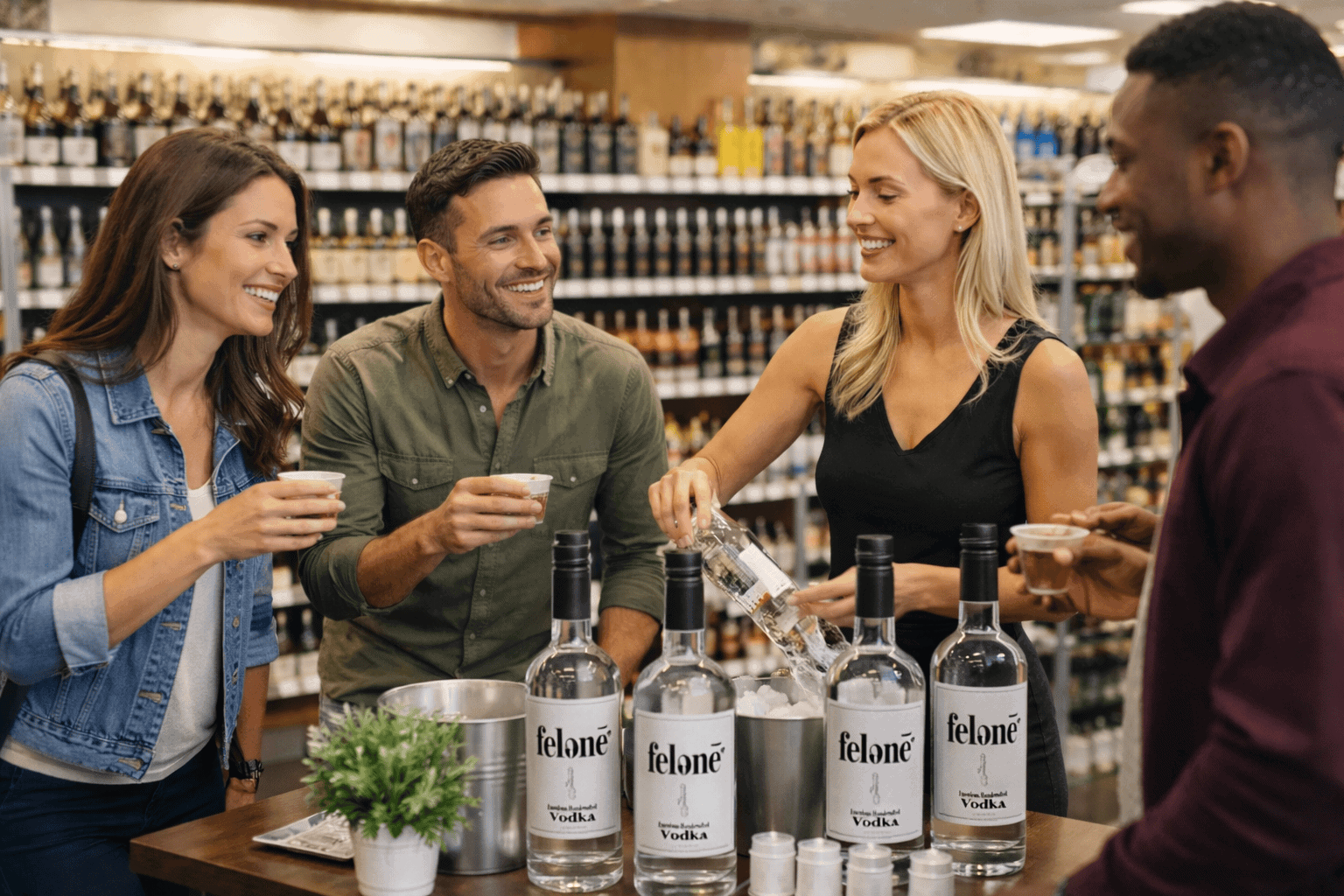
Liquor Store Tasting Tips: The Do’s and Don’ts of Sampling Events
Liquor store tastings remain one of the most effective ways to increase spirits sales and build brand loyalty. When executed properly, in-store sampling converts hesitant shoppers into buyers, increases basket size, and creates lasting brand recall. In 2026, tastings are even more critical as consumers seek experiential engagement before purchase.
Why Liquor Store Tastings Still Work in 2026
Retail behavior has shifted toward experience-driven purchasing. However, the fundamentals of trial and conversion remain unchanged. Shoppers still want to taste before committing, especially in premium categories.
Importantly, tasting events reduce perceived risk. A consumer who samples a product is significantly more likely to purchase it immediately. Additionally, real-time interaction with brand representatives builds trust and credibility.
From a retailer perspective, tastings also increase dwell time. Longer time in-store often leads to incremental purchases beyond the featured product.
According to NielsenIQ, in-store engagement continues to outperform passive merchandising in driving conversion. Therefore, tastings should be viewed as a core sales tool rather than a promotional add-on.
RELATED ARTICLE: SOCIAL MEDIA TIPS FOR LIQUOR STORES
The Unique Value of In-Store Shoppers in a Digital Age

In the current era of one-click convenience, most retail sectors have shifted heavily toward online sales. Yet, for liquor retailers, the in-store shopper remains one of the most valuable assets. Unlike online buyers, who often shop by habit or price, in-store customers are open to discovery, impulse, and interaction—especially when spirits sampling is available.
The Psychology Behind Sampling and Conversion
Sampling works because it activates multiple consumer triggers simultaneously. First, reciprocity plays a role. When a customer receives a free sample, a subtle obligation to reciprocate is created.
Second, sensory engagement drives decision-making. Taste, aroma, and texture create a more compelling experience than shelf presence alone.
Third, immediacy matters. When a product is enjoyed in the moment, the purchase decision becomes emotional rather than analytical.
Consequently, brands that invest in tasting programs consistently outperform those relying solely on packaging and price.
The Data Behind In-Store Tastings
Industry research confirms what veteran retailers already suspect—sampling works.
- According to Bevology Inc., brands experience an average 16x sales lift on the day of an in-store tasting.
- Conversion rates range from 30% to 60%, depending on factors like location, engagement style, and sampling product.
- Tastings also lead to improved product placement within the store, thanks to stronger sell-through and staff familiarity.
And the value doesn’t end there.
Studies show that positive word-of-mouth (WOM)—a common result of well-run tastings—can drive 5x to 100x more sales than traditional advertising.
Even when no immediate sale occurs, that tasting experience plants a seed. It creates a memory, a conversation, and often a future purchase.
Benefits to Retailers – Understanding the value of Liquor Store Tasting Tips

1. Increased Revenue Per Tasting Day
On tasting days, sales of the sampled product—and often adjacent products—experience a measurable bump. Customers are more likely to try something new when a free sample removes risk from the equation.
2. Higher Staff Engagement
When store staff are included in the tasting experience, they become powerful brand advocates. A quick pre-shift tasting and a few key talking points can turn a passive shelf stocker into an enthusiastic recommender.
3. Improved Customer Experience
Tastings add energy and interaction to the retail floor. They turn a routine visit into a discovery experience, making your store memorable and worth returning to.
Benefits to Spirits Producers
1. Direct Consumer Feedback
Producers can gather real-time insights on taste preferences, pricing perceptions, and competitive comparisons. This feedback loop can inform future product tweaks or marketing angles.
2. Brand Building at the Point of Sale
There’s no better time to create an emotional connection than when a consumer is already considering a purchase. A face-to-face interaction humanizes the brand and often drives impulse buys.
3. Visual and Sensory Impressions
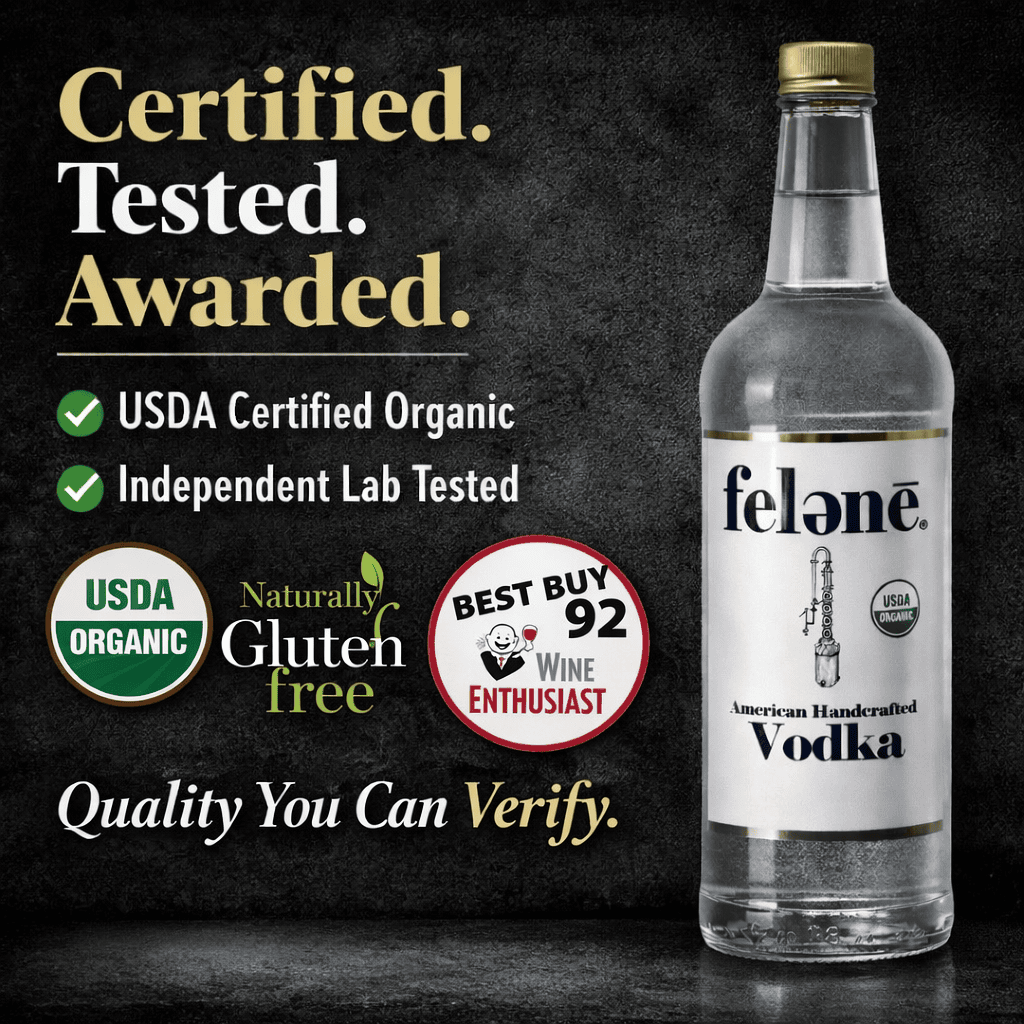
Seeing, smelling, and tasting a spirit—especially one as smooth and clean as Felene Vodka—creates a powerful multisensory association. This helps buyers recall the product even weeks later.
Best Practices for Successful Tastings
1. Location Matters
Position the tasting table near the relevant aisle (e.g., vodka near vodka). Avoid tucking reps in low-traffic corners. Visibility is key.
What is Contextual Priming?
Contextual priming is a psychological concept where exposure to certain cues in the environment influences a person’s behavior or decisions—often without them realizing it.
In a retail setting, this means that when a shopper sees or samples a product near its point of purchase—such as tasting vodka beside the vodka aisle—they are more likely to remember it, trust it, and buy it.
The tasting experience “primes” the customer by creating familiarity and positive association right when a decision is being made. This subtle influence can significantly boost conversion rates during in-store sampling.
2. Engage Store Staff First
Offer mini sample bottles or branded merchandise. A small gesture goes a long way in building in-store advocates. The store staff are the most important audience you will have at an in-store tasting.
3. Mix It Up
Offering a mini cocktail, like an espresso martini, increases appeal. Sweet, easy-to-like drinks have mass market charm.
4. Staff Two People When Possible
One rep should manage the table, while the other roams the store to invite customers to sample. This boosts engagement significantly.
5. Tell a Compelling Story
Educate customers on the product’s uniqueness. At Felene, we highlight our sugarcane base, additive-free process, and organic profile—all powerful differentiators.
Caveats to Consider
1. Tasting Overload
What is Decision Fatigue?
Decision fatigue occurs when people become mentally exhausted from making too many choices. As the number of options increases, the ability to make clear, confident decisions decreases.
In a retail tasting context, this can become a hidden obstacle. When multiple vendors sample similar products—such as several vodkas at once—shoppers feel overwhelmed. Instead of carefully comparing, they may avoid all tastings, make no decision, or simply default to a familiar brand.
This creates a counterproductive dynamic where the presence of many vendors dilutes attention and reduces engagement for each brand. Rather than adding value, it adds confusion.
Retailers aiming to maximize the impact of tasting events should limit overlapping categories, especially within the same aisle or time block. By creating space for each brand to stand out, stores reduce friction, avoid decision fatigue, and ensure customers walk away with both a sample—and a purchase.
If multiple brands are sampling at the same time, it creates confusion. Too many voices dilute the message. Request limited or exclusive time slots when possible.
2. Compliance and Staffing Rules
Many retailers prohibit reps from leaving their table unattended. Always plan accordingly. Two-person teams solve this issue efficiently. Many times rules are in place to comply with state and local regulations. Make it a point to understand the rules in the venue to avoid legal and safety issues.
3. Immediate Sales Aren’t Everything
Not every customer will buy today. But each tasting creates secondary exposure—through word-of-mouth, brand recall, and even social media posts. These ripple effects can last far longer than the tasting itself.
Brands must recognize that exposure without conversion is not failure. Instead, these exposures serve as priming events. The psychology of sampling shows that first impressions plant a cognitive seed that may influence:
- Future purchase decisions
- Recommendations to friends or family
- Recognition in bars or restaurants
- Increased response to digital or social campaigns
- Every non-converting interaction adds to a growing web of earned brand credibility. The compounding effect of these impressions supports long-term market penetration and brand preference.
Why It Works: The Psychology of Sampling
Sampling removes barriers. It activates a sense of curiosity and satisfaction. When someone tries a product for free, they’re more inclined to:
- Trust it.
- Talk about it.
- Buy it again.
Even without a sale, the tasting experience builds brand equity. The implied endorsement of being inside a trusted retail space also elevates the perceived value of the product.
Liquor Store Tasting Tips That Actually Drive Sales
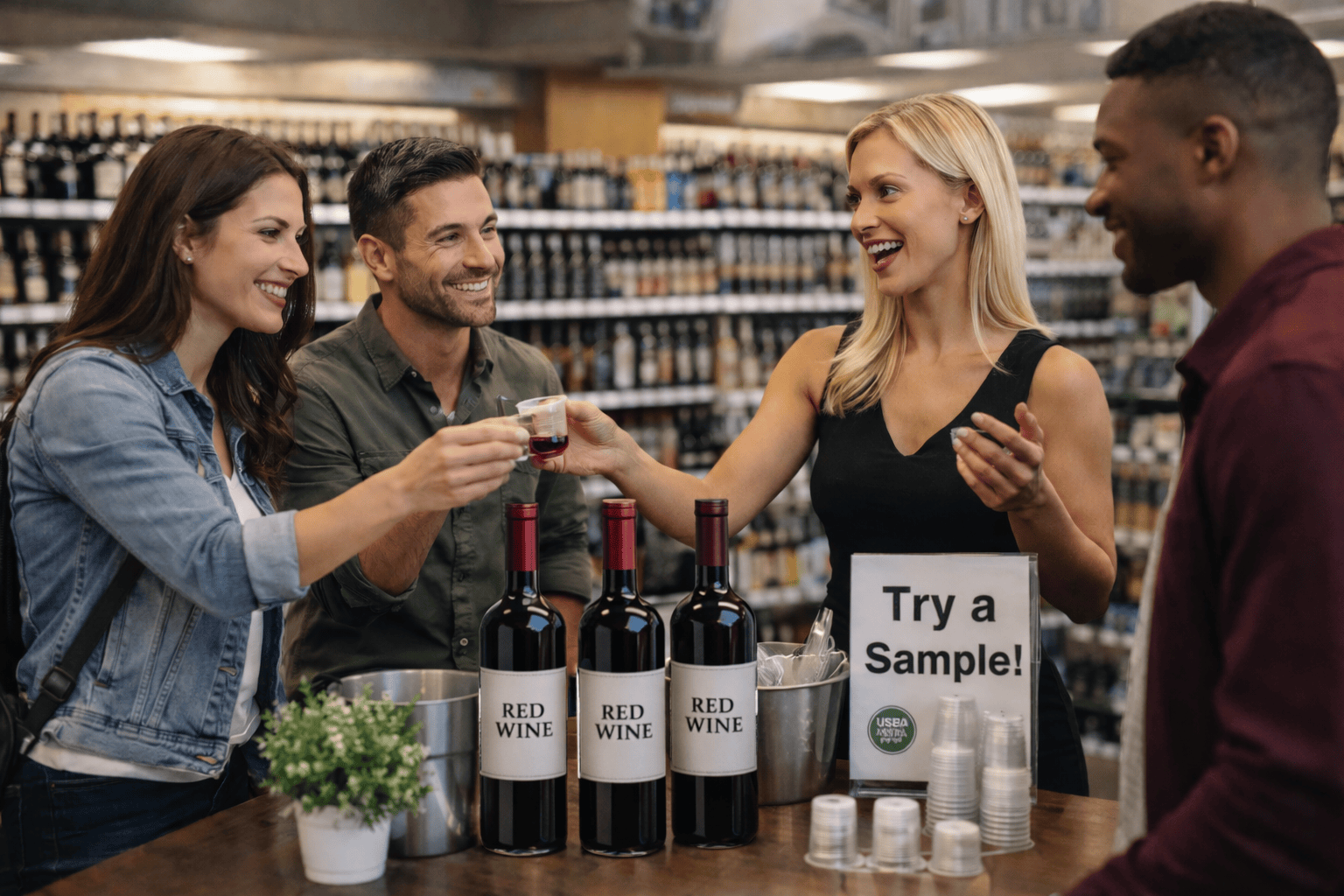
Effective tastings require more than pouring samples. Execution must be deliberate and structured. The following tactics consistently produce results:
1. Position Near High-Traffic Areas
Placement near store entrances or main aisles increases exposure. Visibility drives participation, which drives conversion.
2. Keep Messaging Simple and Clear
Customers should understand the product within seconds. Focus on one or two key selling points, not a full brand story.
3. Lead With Taste, Not Features
Let the product speak first. Then reinforce the experience with concise talking points.
4. Offer a Clear Call to Action
Always direct the customer to the product location. For example, “It’s right behind you on the top shelf.”
5. Maintain Energy and Engagement
An engaged brand ambassador consistently outperforms a passive presence. Tone and enthusiasm directly impact results.
Best Practices for Liquor Store Owners and Managers
Retailers benefit most when tastings are aligned with store objectives. Coordination between supplier and retailer is essential.
First, tastings should be scheduled during peak traffic windows. Weekend afternoons typically outperform weekday evenings.
Second, inventory must be aligned with expected demand. Nothing undermines a tasting faster than running out of product.
Third, staff should be informed about the tasting in advance. When store employees reinforce the recommendation, conversion increases.
Additionally, retailers should track performance. Simple metrics such as bottles sold during the event provide actionable insights.
Compliance and Operational Considerations

Tastings must always comply with state and local regulations. Rules vary widely by jurisdiction, including sample size limits and licensing requirements.
Therefore, both suppliers and retailers should confirm compliance before scheduling events. Failure to do so can result in fines or suspension of privileges.
In Colorado, for example, tastings are permitted under specific conditions governed by the state’s liquor enforcement division. Retailers should remain current with regulatory updates.
How Premium Vodka Brands Benefit From Tastings
Premium vodka brands particularly benefit from sampling. Many consumers assume vodka is interchangeable. However, tasting quickly disproves that assumption.
When consumers experience a clean, smooth, additive-free vodka, the difference becomes immediately apparent. This is especially true with organic sugarcane-based vodkas.
As a result, tastings provide an opportunity to differentiate on quality rather than price. This is a critical advantage in a competitive category.
A Simple Tasting Execution Checklist
Use this checklist to ensure consistent execution:
- Confirm legal compliance and permits
- Schedule during peak traffic periods
- Ensure adequate inventory levels
- Prepare concise product messaging
- Train staff or brand ambassadors
- Position for maximum visibility
- Track sales during and after the event
This structured approach reduces variability and improves outcomes across locations.
The Future of Liquor Store Tastings
Looking ahead, tastings will continue evolving toward more curated experiences. Retailers are increasingly integrating education, storytelling, and pairing suggestions.
However, the core principle remains unchanged. Consumers buy what they enjoy. Tastings accelerate that discovery process.
Brands and retailers that prioritize in-store sampling will maintain a competitive advantage. Conversely, those that neglect this channel risk losing relevance in an experience-driven market.
Final Takeaway
Liquor store tastings are not optional. They are a proven sales driver that converts interest into purchase and builds long-term brand loyalty. When executed with discipline and consistency, tastings deliver measurable results for both brands and retailers.
FAQ: Liquor Store Tasting Tips
Do tastings actually increase sales?
Yes. Conversion rates increase significantly when customers sample a product before purchasing.
What is the ideal tasting duration?
Most effective tastings run between two and four hours during peak traffic.
How many bottles should be stocked for a tasting?
Inventory should exceed expected demand. A common benchmark is 2–3 cases, depending on traffic.
Are tastings legal in all states?
No. Regulations vary. Always verify state and local laws before conducting a tasting.
What products perform best in tastings?
Premium and differentiated products typically benefit most from sampling.